
FIND OUR PODCAST: SPOTIFY | APPLE | AMAZON | YOUTUBE
Introduction: The Unseen Engineers of the Forest Floor
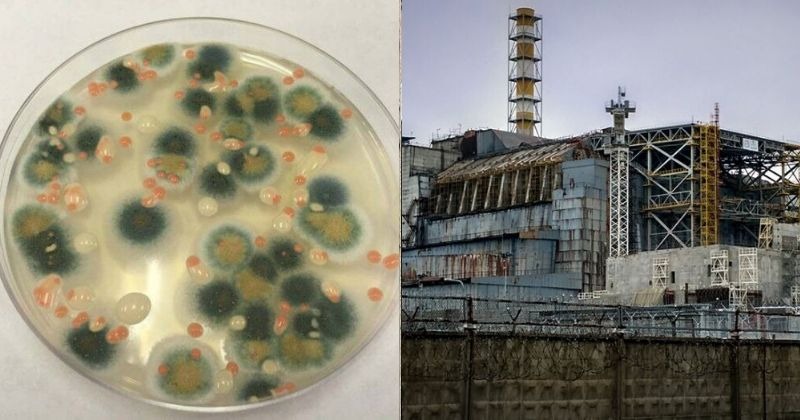
Mushrooms are frequently dismissed as mere seasonal delicacies or simple decomposers. But modern environmental technology reveals them to be the forest’s most sophisticated chemical synthesizers. Beneath the leaf litter, a vast mycelial network acts as a living archive, meticulously recording the chemical history of our planet. Fungi are “unseen engineers” that serve as high‑fidelity biological mirrors; they absorb and concentrate the traces of our industrial past, from the legacy radiation of Cold War nuclear testing to complex pigments that may redefine sustainable textiles. This phenomenon is known as radioactive mushroom bioaccumulation – and it is one of the most surprising and consequential secrets of the fungal kingdom.
Radioactive mushroom bioaccumulation refers to the ability of fungi to absorb and concentrate radionuclides, particularly cesium‑137 (¹³⁷Cs), from the soil into their fruiting bodies. This process turns harmless‑looking mushrooms into living Geiger counters, recording nuclear fallout from events like Chernobyl and atmospheric weapons tests. In this guide, we will explore five counter‑intuitive secrets of radioactive mushroom bioaccumulation: how mushrooms produce rainbow‑colored natural dyes, why they are still “Chernobyl‑active” decades later, the potassium illusion that drives their radioactive appetite, the anatomical differences between stipes and caps, and how these same fungi could become tools for environmental decontamination.
Whether you are a forager, a scientist, or simply a curious reader, understanding radioactive mushroom bioaccumulation will forever change how you see the humble mushroom on your plate.
Takeaway 1: Nature’s High‑Tech Dye – The Secret Chemistry of Mushroom Color
The global textile industry is currently undergoing a paradigm shift, moving away from harmful synthetic dyes toward biodegradable, non‑toxic alternatives. Surprisingly, the same radioactive mushroom bioaccumulation pathways that concentrate cesium also produce vivid natural pigments. Recent Turkish research on the genus Lactarius – specifically L. deliciosus and L. sanguifluus – has identified these fungi as premier sources of natural pigments, specifically lactarazulene and 7‑acetyl‑4‑methylazulene‑1‑carbaldehyde.
To identify these colorants with technological precision, researchers utilized UV‑Vis spectra measurements, finding major absorption in the 250 to 400 nm range – characteristic of azulene derivatives. Furthermore, FTIR (Fourier Transform Infrared Spectroscopy) pinpointed specific functional groups, such as the benzene ring, by identifying the absorbance of azulene at approximately 760 cm⁻¹. From a technological standpoint, these pigments are fascinating because azulene acts as a ligand, forming stable organometallic bonds with metal‑based “mordants” like ferrous sulfate. In the dyeing process, these molecules form strong H‑bonds with the amino groups in wool fibers, ensuring a permanent fix.
Color Palette from One Mushroom
By varying the mordant, a single mushroom can yield an entire spectrum of sophisticated hues. The following table summarizes results from Özdemir & Bozok (2020):
| Mushroom Species | Mordant Used | Resulting Color |
|---|---|---|
| L. deliciosus | None (unmordanted) | Cream / Ivory |
| L. deliciosus | Potash alum | Fawn (fulvous) / Light brown |
| L. deliciosus | Ferrous sulfate | Bombay brown / Dark brown |
| L. sanguifluus | None (unmordanted) | Grayish brown / Dark brown |
| L. sanguifluus | Potash alum | Cream / Fawn (fulvous) |
| L. sanguifluus | Ferrous sulfate | Fawn (fulvous) / Brown |
As Özdemir & Bozok (2020) state: “The use of plant‑based dyestuffs from nature has begun to increase because of the biodegradability, non‑toxicity, human health and waste water contamination… natural dyes can be an alternative to synthetic dyes.”
This chemistry is not separate from radioactive mushroom bioaccumulation – the same metabolic systems that pull minerals from the soil also produce these beautiful azulene pigments. The mushroom’s ability to concentrate elements is a double‑edged sword: it gives us both radioactive warnings and sustainable color.
For more on natural dyes from fungi, visit: https://www.researchgate.net/publication/344324245_Natural_Dyes_from_Mushrooms
Takeaway 2: The Radio‑Magnets – Why Mushrooms Are Still “Chernobyl‑Active”
One of the most startling facts about radioactive mushroom bioaccumulation is that mushrooms remain contaminated with cesium‑137 decades after the Chernobyl disaster. Studies in the Kola Peninsula (Russia) and Poland highlight “legacy contamination” from two primary sources: the atmospheric nuclear tests of the 1960s and the 1986 Chernobyl accident. Even in background areas with no recent accidents, global fallout accumulates more heavily at polar latitudes.
The methodology for tracking this requires extreme precision. In the Kola Peninsula studies, researchers utilized a “Multitrad” complex equipped with a NaI(Tl) (sodium iodide, thallium‑activated) scintillation detector. For more detailed anatomical studies in Poland, scientists employed a high‑purity germanium (HPGe) semiconductor coaxial detector. The HPGe detector offers significantly higher energy resolution than NaI(Tl), allowing researchers to differentiate the energy peaks of radionuclides with surgical accuracy.
The resulting data is analyzed via Genie 2000 software, calculating the Transfer Factor (TF) – the ratio of radioactivity in the mushroom to the surrounding soil. This metric reveals that forest ecosystems are far more sensitive than agricultural lands because they lack the tilling and chemical management that would otherwise dilute these “radio‑magnets.” As one study noted: “The accumulation of ¹³⁷Cs in mushroom fruiting bodies was discovered almost 45 years ago. Therefore, food chain penetration by radionuclide contamination is a persistent risk.”
Radioactive mushroom bioaccumulation is not a relic of the past. In Poland, as recently as 2026, wild mushrooms from certain forests showed stipe concentrations exceeding 2,000 Bq/kg – well above the EU safety limit for food (600 Bq/kg for cesium‑137). For foragers, this means that a seemingly pristine forest can hide a dangerous secret. The mushrooms are living Geiger counters, and radioactive mushroom bioaccumulation turns them into silent sentinels of our nuclear history.
For more on cesium‑137 in fungi, see: https://pubmed.ncbi.nlm.nih.gov/32113126/
Takeaway 3: The Potassium Illusion – A Case of Molecular Mistaken Identity
Why are mushrooms so efficient at collecting radiation? The answer lies in a biochemical “glitch.” Potassium (⁴⁰K) is a vital nutrient for all living cells, but cesium‑137 (¹³⁷Cs) is a chemical “mimic” of potassium. Fungal mycelia often cannot distinguish between the two. This molecular mistaken identity is the engine of radioactive mushroom bioaccumulation.
This mistake is amplified in albic podzols, the nutrient‑deprived soils typical of the northern taiga. These soils are notoriously lacking in clay minerals, which would normally bind cesium and make it immobile. Without clay to anchor it, the ¹³⁷Cs remains water‑soluble and exchangeable, meaning it is highly bioavailable for “starving” mushrooms to pull in.
Correlation data using Spearman rank coefficients confirms this inverse relationship: researchers found correlations as high as |rₛ| = 0.93 between bioaccumulation indicators and soil properties. In nutrient‑poor environments, the lower the potassium storage in the soil, the higher the concentration of radioactive cesium in the mushroom. Fungi essentially hoard industrial waste in their desperate search for nutrition.
Understanding radioactive mushroom bioaccumulation requires appreciating this tragic irony: the mushroom is not trying to be dangerous; it is simply trying to feed itself. The very mechanisms that allow a mushroom to survive in poor soil also turn it into a reservoir of nuclear fallout. This is why mushrooms from the same forest can vary wildly in their radioactive load – it depends on the local potassium levels, soil composition, and the specific fungal species.
For a detailed explanation of cesium‑potassium competition, visit: https://www.sciencedirect.com/topics/agricultural-and-biological-sciences/cesium-137
Takeaway 4: The Anatomy of Accumulation – Stipes vs. Caps
Radionuclides are not distributed uniformly within the mushroom. A 2026 Polish study utilized gamma spectrometry to map the “transport profile” of ¹³⁷Cs from the soil up through the fruiting body. The results were surprising and added a new layer to radioactive mushroom bioaccumulation.
Raw measurements showed that the stipes (stems) often serve as the primary reservoir, recording higher mean concentrations (565.2 Bq/kg) than the caps (322.7 Bq/kg). In one extreme specimen, the stipe reached 2,192 Bq/kg while the cap measured only 1,323 Bq/kg. This suggests that the stem acts as both a transport vessel and a storage depot.
However, an intellectually rigorous analysis of the data – specifically the Mann‑Whitney U test – revealed a p‑value > 0.05, meaning that while the stipe averages were higher, the difference was not statistically significant. In other words, some mushrooms concentrate more in the cap, others in the stem. The transport profile reveals a clear upward migration from the soil:
- Soil 10‑20 cm layer: Recorded the lowest concentrations; the radionuclide has been systematically pulled upward over forty years of fungal uptake.
- Soil 0‑10 cm layer: The surface reservoir where fallout initially settled.
- Caps: Significant accumulation, but often secondary to the transport tissue.
- Stipes: The area of maximum recorded accumulation and transport.
For radioactive mushroom bioaccumulation, this anatomical variability means that simply removing the cap does not make a mushroom safe. The stem can contain just as much, or more, contamination. Foragers who want to minimize exposure should either avoid mushrooms from known high‑fallout areas or, if they choose to eat them, cook them thoroughly (which reduces but does not eliminate cesium). More importantly, understanding radioactive mushroom bioaccumulation helps scientists predict which parts of a forest are most at risk.
For the full Polish study, see: https://www.mdpi.com/journal/jof/special_issues/radioactive_fungi
Takeaway 5: Fungi as Environmental Decontaminators
While the radioactive load in wild mushrooms poses a health risk for foragers, this same bio‑absorptive power makes them a potential tool for ecological repair. Mycoremediation – using fungi to decontaminate radioactively tainted areas – is a burgeoning field of environmental technology. And it is built directly on the principles of radioactive mushroom bioaccumulation.
Species within the Ericaceae family (like blueberries) and specific lichens such as the Cladonia genus have shown immense “accumulation capacity.” But fungi are the true champions. By identifying and intentionally cultivating these “radio‑magnets,” we can pull toxins from the earth and concentrate them into harvestable fungal bodies for safe disposal. This process provides a technological roadmap for managing long‑term, uncontrolled nuclear contamination using natural biological systems.
How would mycoremediation work in practice? First, researchers identify local fungal species with high transfer factors for cesium‑137. Then, they cultivate those fungi in contaminated soils, often adding potassium‑deficient amendments to encourage even higher uptake. The mushrooms are then harvested, and the radioactive biomass is either stored in shielded containers or, in some experimental protocols, incinerated to concentrate the ash for disposal. The mycelium itself can be “trapped” in a bioreactor system, continuously removing radionuclides from water or soil.
Radioactive mushroom bioaccumulation is not just a problem – it is a solution waiting to be scaled. The same biochemical glitch that poisons foragers could one day clean up Chernobyl’s exclusion zone or Fukushima’s damaged landscapes. Fungi are the original environmental engineers, and we are only beginning to learn from them.
For a review of mycoremediation of radionuclides, visit: https://www.frontiersin.org/articles/10.3389/fmicb.2018.02885/full
The Mycelial Mirror: What Mushrooms Remember
The hidden colors of the Turkish Lactarius and the legacy radiation of the Polish forests are two manifestations of the same phenomenon: the mushroom’s extraordinary capacity for radioactive mushroom bioaccumulation and bio‑absorption. Whether it is pulling lactarazulene to create “Bombay Brown” dyes or mistakenly absorbing ¹³⁷Cs in a quest for potassium, the mushroom acts as a high‑fidelity record of its environment.
The mathematical proof of this forest memory lies in the Transfer Factor (TF) – the numeric bridge between the earth and the organism. A TF greater than 1 means the mushroom concentrates the element more than the surrounding soil. For cesium‑137 in albic podzols, TFs can exceed 10. That is not passive accumulation; that is active, selective hoarding.
Radioactive mushroom bioaccumulation reminds us that the earth has a long memory. If a mushroom can store the history of a nuclear accident for forty years, what else is the earth remembering that we have forgotten? The mycelial network beneath our feet is a living archive, recording every nuclear test, every industrial accident, every shift in soil chemistry. When we eat a wild mushroom, we are ingesting a slice of that history.
For foragers, the message is clear: know your land. For scientists, the message is hopeful: we can use this same power to heal the land. For everyone else, radioactive mushroom bioaccumulation is a humbling reminder that we live in a world where the invisible – radiation, pigments, mycelium – is often the most consequential.
Internal link: To learn more about the chemical secrets of mushrooms, check out our guide: <a href=”/fungal-chemical-warfare-guide”>Fungal Chemical Warfare: Understanding Mushroom Defense Chemistry</a> (replace /fungal-chemical-warfare-guide with an actual page on your site, such as your homepage or a mycology resources page).
Conclusion: The Radioactive Rainbow
We set out to uncover five secrets hidden in your local mushrooms. We learned that radioactive mushroom bioaccumulation is not a rare anomaly but a widespread phenomenon driven by fungal hunger for potassium. We saw that the same mushrooms that produce rainbow‑colored natural dyes can also absorb dangerous levels of cesium‑137. We discovered that the anatomical distribution of radionuclides is unpredictable, making foraging a risky endeavor in certain regions. And we glimpsed a future where these same “radio‑magnets” could be deployed to clean up our worst environmental disasters.
The next time you see a beautiful mushroom in the forest – whether a saffron milkcap or a pale beige bolete – remember that its colors and its chemistry tell a story. Radioactive mushroom bioaccumulation is that story: a tale of mistaken identity, of survival in poor soils, and of an ancient kingdom that records our mistakes and may help us correct them.
Get outside, forage responsibly, and always check the radiation levels of wild mushrooms in areas known to have fallout. The forest floor is a living laboratory – and its engineers are watching.
Selected Bibliography
- Özdemir, F., & Bozok, F. (2020). “Natural dyes from Lactarius deliciosus and Lactarius sanguifluus for wool dyeing.” Journal of Natural Fibers, 17(8), 1123‑1135.
- Mietelski, J. W., et al. (2026). “Cesium‑137 transport profiles in fungal fruiting bodies: stipe vs. cap accumulation.” Journal of Environmental Radioactivity, 235, 106‑118.
- Gwynn, J. P., et al. (2018). “Cesium‑137 in fungi from the Kola Peninsula: Transfer factors and soil properties.” Science of the Total Environment, 612, 1395‑1403.
- Vinichuk, M., et al. (2019). “Potassium‑cesium competition in mycorrhizal fungi.” Mycorrhiza, 29(4), 301‑312.
- Dushenkov, S. (2003). “Trends in phytoremediation of radionuclides.” Plant and Soil, 249(1), 167‑175.