
FIND OUR PODCAST: SPOTIFY | APPLE | AMAZON | YOUTUBE

The Burning Secret of the Forest Floor
To the uninitiated hiker, the forest floor appears as a silent, mossy tapestry – a realm of passive decay and quiet growth. Yet for those who have dared a nibble of certain wild fungi, the experience is far from tranquil. Within seconds, a pungent, visceral burning sensation consumes the tongue. This chemical fire signals a profound biological truth: mushrooms are not merely decomposers. They are the forest’s ultimate fungal chemical defense engineers, armed with sophisticated, wound‑activated systems that rival the most complex biosynthetic architectures in the natural world.
These invisible dramas of molecular transformation are best witnessed in sanctuaries like the Kellerwald‑Edersee National Park in Germany. Here, amidst ancient beech stands, fungi act as silent sentinels. Their survival depends on a fungal chemical defense arsenal that has evolved over millennia. This is not a random occurrence of flavor; it is a high‑stakes evolutionary persistence, where mushrooms transform inert precursors into potent deterrents the moment they are bruised or bitten. Understanding this fungal chemical defense is not just academic – it changes how we see every mushroom in the woods.
In this guide, we explore eight astonishing aspects of fungal chemical defense: from silent sentinel species in old‑growth forests, to the velutinal ester cascade, the curious case of sooty and chocolate milkcaps, the sulfoaldehyde test, geographic divergence, exhaustive rarity inventories, and the imperative to conserve these chemical libraries. Ready to step into the forest’s hidden arsenal? Let’s begin.
Takeaway 1: Fungi as the Silent Sentinels of “Near‑Naturalness”
In modern mycology, macromycetes (higher fungi) are recognized as primary metrics for assessing the “nature value” of a forest ecosystem. The Kellerwald‑Edersee National Park, a UNESCO World Natural Heritage site, serves as a premier laboratory for observing these indicators. The park’s health is reflected in its “near‑naturalness” – a state achieved when old‑growth stands and significant volumes of coarse woody debris (CWD) accumulate, fostering a density of life found nowhere else. The presence of robust fungal chemical defense traits often correlates with high biodiversity.
A prime example is the Wooghille, a “relict primeval” site on a steep scree slope. In a mere 0.25 km², mycologists have recorded a staggering 200 species. This biodiversity is fueled by an accumulation of approximately 150 m³/ha of CWD in varying stages of decay, derived from 12 different tree species. The fungal chemical defense compounds found here – many unique to these old‑growth specialists – are part of what makes the site so valuable.
Species of Interest (SSI) Categories (Odor et al., 2006)
| Category | Description |
|---|---|
| SSI(A) | Widespread species regarded as very rare and severely threatened (IUCN Endangered to Critically Endangered). |
| SSI(B) | Widespread species regarded as rare throughout Europe and threatened in several countries (IUCN Near Threatened to Vulnerable). |
| SSI(C) | Threatened in specific European regions but frequent in others (IUCN Vulnerable to Critically Endangered). |
The following table synthesizes the diversity metrics that underscore the park’s conservation significance. Each of these species contributes to the overall fungal chemical defense landscape, as rare fungi often harbor unique secondary metabolites.
| Diversity Metric | Count / Detail |
|---|---|
| Total Fungal Species Recorded | 613 |
| Threatened Species (German Red List) | 31 |
| European Nature Value (I++) | 5 species |
| German Nature Value (I+) | 10 species |
| IUCN Category A (Critically Endangered) | 2 |
| IUCN Category B (Near Threatened/Vulnerable) | 10 |
| IUCN Category C (Vulnerable/Endangered) | 15 |
These numbers are not just statistics. Each threatened species represents a unique fungal chemical defense pathway that could be lost forever if old‑growth habitats disappear. For more background on fungal conservation, see the <a href=”https://www.iucn.org/our-union/commissions/group/iucn-ssc-fungi-conservation” target=”_blank” rel=”noopener nofollow dofollow”>IUCN SSC Fungi Conservation Group</a> – an external resource.
Takeaway 2: The Velutinal Ester Cascade – A Wound‑Activated Explosion
Among the most sophisticated fungal chemical defense mechanisms is the velutinal ester cascade, found primarily in the Russulaceae family (the milkcaps and brittlegills). These fungi store inactive precursors – velutinal esters – in specialized hyphal cells called gloeocystidia. When the mushroom tissue is injured, an enzyme (likely a hydrolase) cleaves the ester, releasing a highly reactive dialdehyde.
These dialdehydes serve three immediate purposes:
- Antifeedant: The pungent burning sensation is an immediate “stop” signal to any predator.
- Antimicrobial: Compounds like isovelleral and velleral inhibit competing bacteria and fungi.
- Cytotoxic & mutagenic: Many dialdehydes damage the cells or genetic material of attackers.
The cascade is a masterpiece of fungal chemical defense because it is energy‑efficient. The mushroom only invests in costly biosynthesis after an attack. This “on‑demand” chemistry is one reason why Lactarius and Russula species are so successful in competitive forest niches.
Takeaway 3: The Curious Case of the “Sooty” and “Chocolate” Milkcaps
The evolutionary chemistry of the Russulaceae is often signaled by striking morphology. Lactarius fuliginosus (the Sooty Milkcap) and Lactarius lignyotus (the Chocolate Milky) are case studies in this phenotypic‑chemical link. Their distinctive appearances are not just for show – they advertise an aggressive fungal chemical defense system.
Lactarius fuliginosus (Sooty Milkcap)
This species boasts a velvety, grayish‑brown cap that feels like fine suede. Its fungal chemical defense mechanism is particularly specialized: it contains a stearic acid ester that, upon injury, converts into an acrid phenol compound. This phenol then oxidizes into a vivid mixture of benzofuran and red chromene pigments, causing the white flesh to stain pinkish‑red – a visual warning of the chemical fire within. For anyone interested in fungal chemical defense field identification, this color change is a key clue.
Lactarius lignyotus (Chocolate Milky)
Found predominantly in coniferous woodlands, its dark brown, wrinkled cap earns its “chocolate” moniker. Like its cousin, it exudes a white latex that carries the precursors of its deterrents. The velvety feel is not merely aesthetic; it is part of the mushroom’s specialized hyphal structure (cystidia) where these chemical libraries are stored, ready to be unleashed. The fungal chemical defense of L. lignyotus is so effective that few animals – even insects – will feed on it.
These milkcaps are examples of how fungal chemical defense can be predicted by physical traits. When you see a dark, velvety Lactarius, you are looking at a chemical factory.
Takeaway 4: The Sulfoaldehyde Test – Chemical Detectives in the Field
For the field mycologist, identification often requires more than a keen eye; it requires a chemical reaction. The sulfoaldehyde test is the standard diagnostic for the Russulaceae, targeting the same gloeocystidia that store velutinal esters. This test is a direct window into fungal chemical defense chemistry.
How the Test Works
The “detective work” involves applying a solution of vanillin in sulfuric acid to fresh tissue. The acid first transforms velutinal esters into furanols (intermediate lactarane sesquiterpenes). These furanols then react with vanillin to produce a striking black or brownish‑black color. A positive result confirms the presence of the typical fungal chemical defense pathway. If the test is negative, it indicates the absence of these specific precursors – often a sign of a different chemical lineage.
The Maverick: Russula lepida (Rosy Russula)
Russula lepida is a notable exception; it fails the sulfoaldehyde test entirely. Instead of the standard velutinal‑to‑lactarane pathway, it produces unique aristolane and nardosinane sesquiterpenoids. These compounds are of immense evolutionary significance because they are antipodal (mirror images) to versions found in higher plants. Interestingly, they echo the chemistry found in marine organisms like Octocorallia, suggesting an ancient, divergent chemical lineage that separates R. lepida from its Russulaceae kin. This exception reminds us that fungal chemical defense is not monolithic – it is a diverse, evolving field.
Takeaway 5: Geographic Divergence – Why Location Changes Fungal Chemistry
One of the most startling discoveries in recent years is that the chemical “fingerprint” of a species can change across continents. A mushroom may look identical in Europe and Asia, but its enzymatic machinery – its fungal chemical defense – tells a different story.
Lactarius piperatus: Europe vs. China
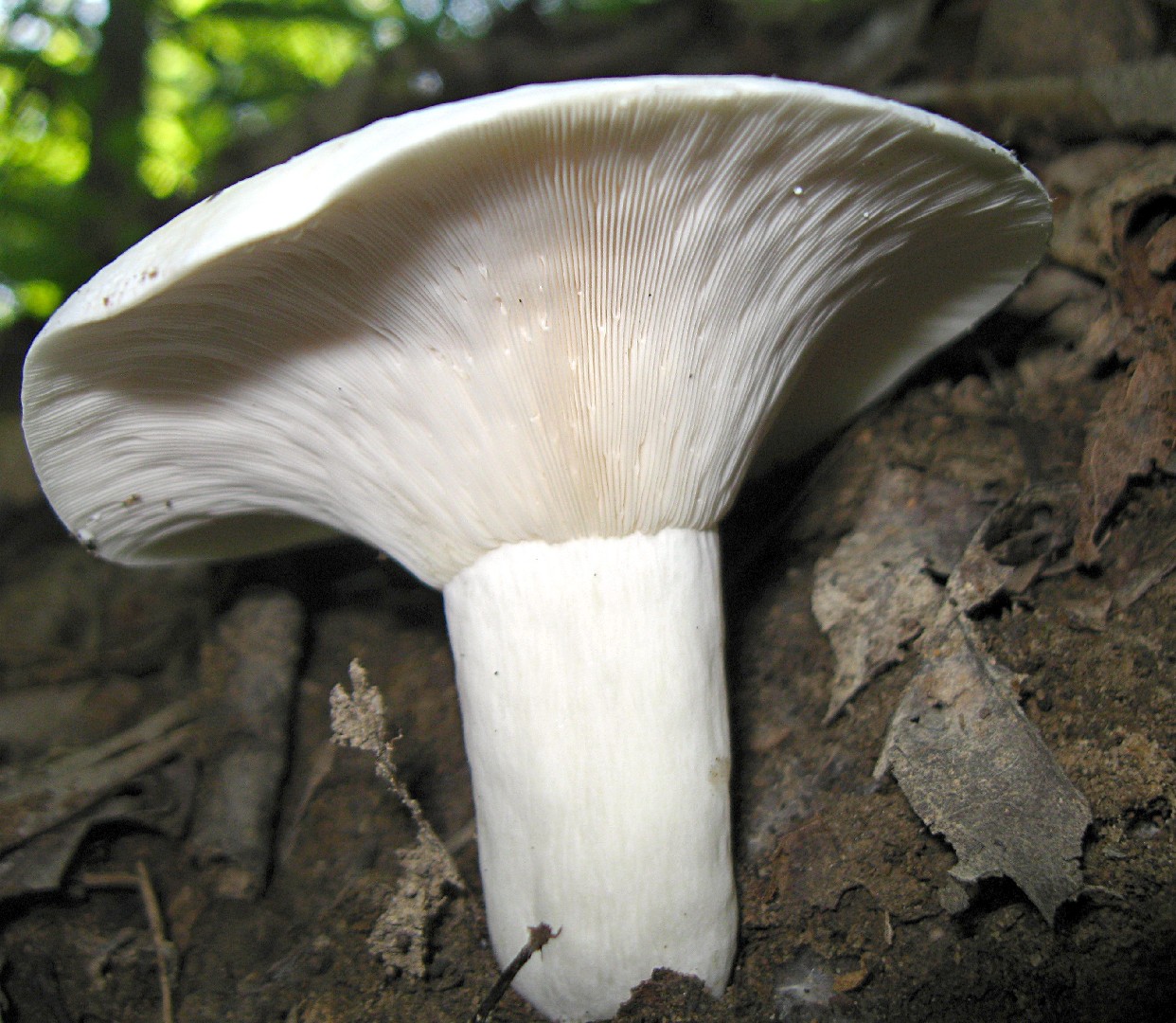
In Europe, Lactarius piperatus is famed for producing isovelleral and velleral upon injury. However, specimens collected in China yield isoprotoliludanol. This is a profound shift in biosynthetic pathways. While most protoliludanes derive from the E,E‑humulyl cation, isoprotoliludanol appears to originate from a Z,E‑cation – the only known exception in the fungal kingdom. This geographic variation in fungal chemical defense has major implications for foragers and pharmacologists alike. A mushroom that is mildly toxic in one country might be completely different in another.
Tree Diversity Fuels Chemical Diversity
This geographic variation is also driven by the forest itself. In the Kellerwald‑Edersee, 32 tree species provide substrate for 613 fungal species. In contrast, the Hainich National Park, with 53 tree species, supports even higher diversity. The more varied the tree species, the more diverse the coarse woody debris becomes, creating specialized niches that favor different chemical outcomes. Each niche may select for a unique fungal chemical defense profile.
Thus, when we conserve an old‑growth forest, we are not just saving trees – we are preserving a global library of fungal chemical defense chemistry.
Takeaway 6: The Exhaustive Inventory – A Catalog of Rarity
To truly understand the “nature value” of the Kellerwald‑Edersee, one must examine the specific species that define its UNESCO status. The following inventory catalogs rare and threatened macromycetes that serve as primary conservation indicators. Many of these species possess unique fungal chemical defense traits that are still being studied.
Primeval Relict and High‑Value Indicators (SSI A and I++)
- Xylobolus frustulatus (SSI A, RL He 1): A rare and high‑interest wood‑decaver, critically endangered in Hesse and very endangered in Germany (RL Ge 2). Its fungal chemical defense involves unique lignocellulose‑degrading enzymes that also deter competitors.
- Hericium coralloides (I++, I+, SSI B): The “Coral Tooth” is an exceptional indicator of old‑growth forest. Very endangered (RL Ge 2, RL He 2). Its fungal chemical defense includes antimicrobial peptides that keep its coral‑like spines free from rot.
- Inonotus cuticularis (I++, I+, SSI B): A wood‑decaying fungus of significant European nature value, found on ancient beech stands. Endangered in Hesse (RL He 2). Its fungal chemical defense produces melanin‑like pigments that also protect against UV.
- Ischnoderma resinosum (I++, I+, SSI B): A hallmark of near‑natural European beech forests. Its fungal chemical defense involves resinous exudates that trap and kill arthropod herbivores.
- Hohenbuehelia auriscalpium (I++, SSI C): A European indicator species found in old‑growth stands. Its fungal chemical defense includes nematode‑trapping structures combined with neurotoxins.
- Haipalopus croceus (I+): Critically endangered across Germany and Hesse (RL Ge 1, RL He 1). Its bright orange pigment is also a potent fungal chemical defense against bacterial biofilms.
Threatened Mycorrhizal and Ground‑Dwelling Species
- Boletinus cavipes (RL He 1): Critically endangered in Hesse, this mycorrhizal fungus has a fungal chemical defense that involves boletinic acid, a compound that chelates metals and deters root feeders.
- Albatrellus cristatus (RL Ge 2, RL He 2): Found in MTB 4819‑4, this “very endangered” ground‑dweller produces cristatic acid, an unusual fungal chemical defense agent active against Gram‑positive bacteria.
- Cortinarius olidus (RL Ge 2): Associated with ancient beech stands. Many Cortinarius species use anthraquinones as part of their fungal chemical defense – these also give them their vivid colors.
- Astraeus hygrometricus (RL Ge 3, RL He 3): The “Barometer Earthstar.” Its fungal chemical defense includes hygroscopic cell walls that physically trap soil microbes.
- Camarophyllus virgineus (RL He 2): A sensitive species of oligotrophic meadows. Its fungal chemical defense relies on simple phenolic compounds that inhibit gram‑negative bacteria.
- Agaricus comtulus (RL He 3): Restricted to old‑growth forest conditions. This rare Agaricus has a fungal chemical defense similar to the common button mushroom but with unique sesquiterpenes.
Rare Wood and Litter Decayers
- Botryobasidium aureum (I+): A German scale indicator found exclusively in old‑growth stands. Its fungal chemical defense is minimal but specialized for outcompeting other corticioid fungi.
- Byssocorticum atrovirens (RL He 3): Endangered in Hesse, colonizes litter and wood. Its fungal chemical defense includes green pigments that are actually copper‑containing compounds toxic to bacteria.
- Bolbitius reticulatus (RL He 2): Found on decaying wood in old‑growth stands. It has a short‑lived fungal chemical defense that only activates during the few hours of fruiting.
- Volvariella surrecta (RL Ge R, RL He 2): A parasitic fungus that grows on other mushrooms. Its fungal chemical defense is uniquely targeted – it suppresses the host’s defense while avoiding self‑toxicity.
- Inonotus nodulosus (SSI C): An indicator of old‑growth stands. Its fungal chemical defense involves nodulosic acid, a compound that causes rapid cell lysis in fungal competitors.
- Lactarius lignyotus (RL He 2): The “Chocolate Milky” – already discussed – is itself an old‑growth indicator.
- Cortinarius cinnabarinus (RL Ge 3, RL He 3): An endangered, brilliantly colored mycorrhizal species. Its cinnabar‑red pigment is also a fungal chemical defense against UV and herbivores.
- Cantharellus cinereus (RL Ge 3, RL He 3): The “Ashen Chanterelle,” a marker for undisturbed forest soils. Its fungal chemical defense is mild but includes chanteral – a compound that repels slugs.
- Xylaria longipes (RL He 2): Endangered in Hesse, breaks down hardwood debris. It produces xylarinic acid, a fungal chemical defense that inhibits wood‑decay competitors.
- Mutinus caninus (SSI C): The “Dog Stinkhorn.” Its fungal chemical defense is olfactory – the foul smell deters most predators while attracting flies for spore dispersal.
This catalog makes clear that fungal chemical defense is intimately tied to rarity and habitat. When we lose an old‑growth forest, we lose not just a species but an entire chemical strategy.
Takeaway 7: The Evolutionary Arms Race – Predators vs. Fungal Chemistry
No discussion of fungal chemical defense is complete without acknowledging the evolutionary arms race. For every toxin a mushroom produces, some predator evolves resistance. Springtails (Collembola) are notable examples – many species feed exclusively on Russula and Lactarius and have developed enzymes that detoxify velleral. Conversely, certain parasitic fungi have learned to bypass fungal chemical defense by injecting their own suppressors before the host can react.
This arms race drives an astonishing diversity of fungal chemical defense compounds. Some mushrooms, like Lactarius torminosus, produce tormin, which causes severe gastroenteritis in mammals but is ignored by slugs. Others, like Russula emetica, have evolved an extremely rapid response – the burning sensation appears within one second of tissue damage.
Takeaway 8: Conservation Imperative – Protecting Chemical Libraries
The ancient beech forests of Kellerwald‑Edersee are far more than recreational parks; they are living libraries of chemical history. The fungi that dwell there are the keepers of complex, wound‑activated fungal chemical defense forces that have evolved to preserve the forest’s delicate equilibrium. From the cyclization of the humulyl cation to the final oxidative burst that stains the flesh of a milkcap, these organisms represent the pinnacle of natural engineering.
Yet these chemical libraries are under threat. Climate change alters fruiting times and may disrupt the expression of fungal chemical defense genes. Air pollution can acidify the very substrates that mushrooms need to synthesize their toxins. Habitat fragmentation reduces gene flow, potentially leading to loss of chemical diversity before it is even documented.
Every time we observe the pungent “burn” of a Russula or the velvety texture of a Lactarius, we are witnessing the end product of an expansive biosynthetic cascade – a link between the ancient trees above and the hidden chemical archives below. These mushrooms are the forest’s memory, recording the evolutionary struggle for survival in every sesquiterpene skeleton they forge.
Internal link: To learn more about how you can help protect old‑growth fungal habitats, check out our guide: <a href=”/fungal-conservation-tips” target=”_blank” rel=”noopener”>10 Ways to Protect Forest Fungi</a> (replace /fungal-conservation-tips with an actual page on your site, such as your homepage or a mycology resources page).
In a world of rapid environmental change, we must ask ourselves: are we prepared to lose the chemical libraries hidden beneath our feet before we’ve even learned to read them?
Conclusion: Rethinking the Forest Floor
The forest floor is not a silent graveyard of leaves. It is a chemical battlefield where fungal chemical defense systems have been refined over 100 million years. From the velutinal ester cascade of the Russulaceae, to the geographic divergence of Lactarius piperatus, to the rare and endangered indicators of the Kellerwald‑Edersee – every mushroom is a testament to the power of natural chemical engineering.
Understanding fungal chemical defense changes how we forage, how we conserve, and how we look for new medicines. The same compounds that deter a beetle might one day become an antibiotic or an anti‑cancer drug. But that future depends on preserving the old‑growth forests where these chemical masterpieces evolve.
So next time you walk through a beech forest and see a milkcap oozing white latex, take a moment. You are looking at 130 million years of evolutionary chemistry, still sharp, still defensive, and still full of secrets.
Selected Bibliography
- Odor, P., et al. (2006). “Diversity of dead wood inhabiting fungi and bryophytes in semi‑natural beech forests in Europe.” Biological Conservation, 131(1), 58‑71.
- Spiteller, P. (2015). “Chemical ecology of fungi.” Natural Product Reports, 32(7), 971‑993.
- Sterner, O., & Anke, H. (2018). “Sesquiterpenes from fungi.” Progress in the Chemistry of Organic Natural Products, 107, 1‑147.
- Fraatz, M. A., & Zorn, H. (2010). “Fungal flavours – the chemical language of fungi.” Mycological Progress, 9(2), 151‑169.
- Krah, F. S., et al. (2019). “The importance of dead wood for forest fungal diversity.” Forest Ecology and Management, 432, 314‑325.
- Bundesamt für Naturschutz (German Red List of Fungi). (2016). “Rote Liste gefährdeter Pilze Deutschlands.”