

FIND OUR PODCAST: SPOTIFY | APPLE | AMAZON | YOUTUBE
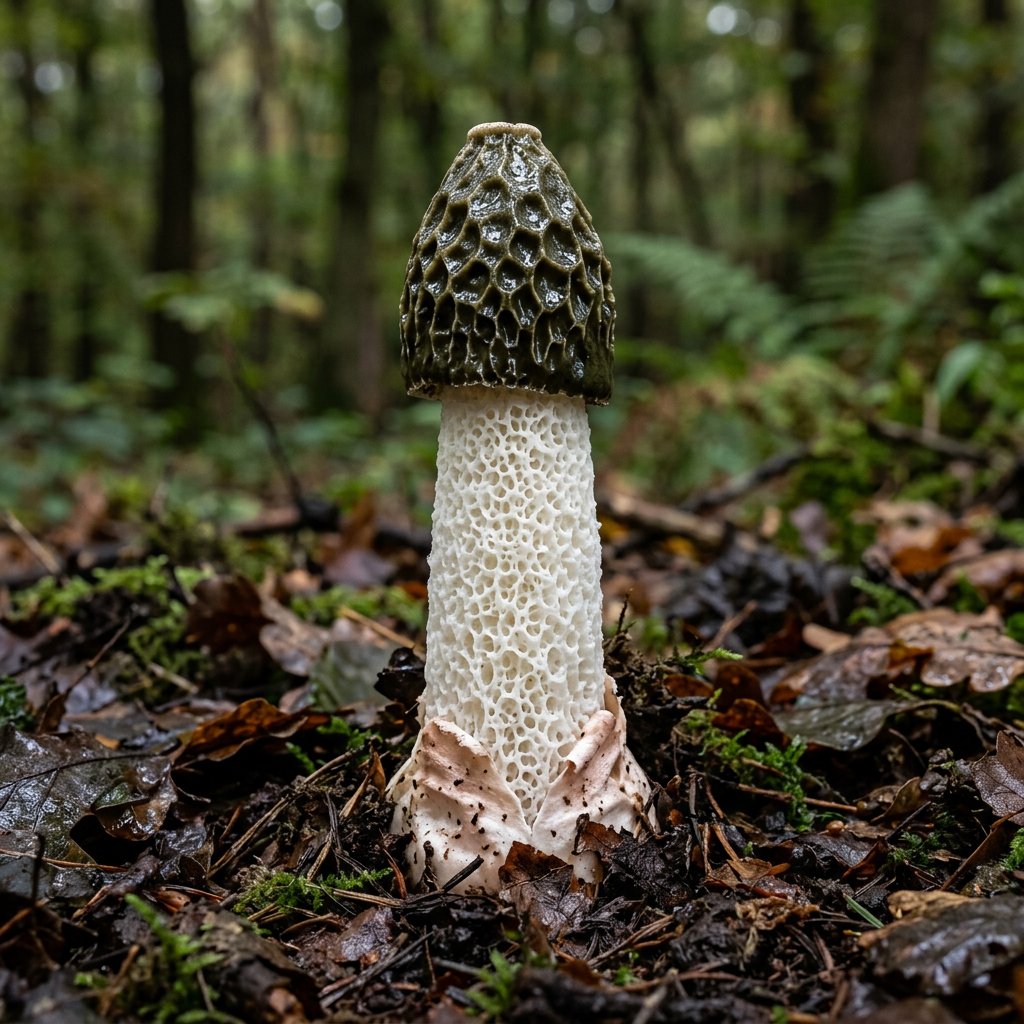
Image Source: plantiary.com
The Forest’s Most Misunderstood Inhabitant
To the uninitiated hiker, the first sign of a Common Stinkhorn (Phallus impudicus) is rarely a visual discovery. Instead, it begins with an assault on the senses—a sudden, cloying “scent of death” wafting through the damp undergrowth, convincing the traveler they have stumbled upon a rotting carcass. Yet, upon parting the ferns, one finds not a fallen deer, but a bizarre, immodest organism rising defiantly from the soil.
Historically dubbed the “Devil’s Egg” or “Witch’s Egg”—a term rooted in the folk medicine of the Kievan Rus—this fungus has spent centuries as an object of both revulsion and fascination. Its Latin name, Phallus impudicus, translates literally to the “shameless” or “immodest” phallus, a taxonomic nod to its unmistakable morphology. But beneath its offensive exterior lies a biological masterpiece of rapid growth, sophisticated animal partnerships, and a biochemical profile that challenges our understanding of “rot.” These Common Stinkhorn mushroom facts reveal an organism far more complex than its reputation suggests.
The species belongs to the family Phallaceae, order Phallales, within the basidiomycete fungi. It is widely distributed across Europe, North America, and parts of Asia, typically appearing from late summer through autumn in deciduous and mixed woodlands. Its preference for nutrient-rich, disturbed soils—often near rotting wood, leaf litter, or even compost heaps—makes it a familiar sight to gardeners and foresters alike.
Yet for all its commonness, the stinkhorn remains one of the most misunderstood organisms in the fungal kingdom. We tend to judge it by its brief, offensive appearance above ground, but this is a failure of perspective. The pungent fruiting body is merely the transient reproductive organ of a massive, ancient, and unseen subterranean network. Like the related Armillaria colonies that span hundreds of acres, the Phallus genus lives a complex, hidden life in the soil long before its “eggs” ever break the surface.
This article explores five surprising truths about this remarkable fungus—revealing how its “shameless” reputation masks a sophisticated biology that regulates forest hygiene, heals wounds, and stabilizes ecosystems.
1. From “Peanut” Egg to “Asphalt-Cracker” Overnight
The life cycle of the stinkhorn is a study in dramatic physical and chemical transformation. It begins as a “witch’s egg”—a whitish, gelatinous sphere partially submerged in leaf litter. While often described as scentless, the core of the egg actually possesses a mild, pleasant aroma of raw peanuts. Within this orb, the entire future mushroom is compressed like a tightly wound spring, suspended in a thick gelatinous matrix.
The Witch’s Egg: A Masterpiece of Compression
The egg stage is a marvel of biological engineering. The developing fruiting body is packed into a space barely larger than a hen’s egg, with all the structures—the stalk, the cap, and the gleba—folded into an impossibly compact arrangement. The gelatinous matrix surrounding the compressed tissues serves multiple functions: it provides hydration, protects the developing structures from physical damage, and likely contains antifungal compounds that prevent premature decomposition.
The outer peridium (the egg’s skin) is tough and leathery, protecting the developing fungus from desiccation and mechanical injury. When mature, this peridium splits open in a star-like pattern, allowing the rapidly expanding stalk to emerge. In some related species, this splitting is explosive, but in Phallus impudicus, it is a more controlled rupture.
The Eruption: Nature’s Fastest Growth
The transition from this humble “egg” to a mature fruiting body represents one of the most violent growth rates in the biological world—a key stinkhorn growth rate fact that continues to astonish mycologists:
- Growth Velocity: The stalk can elongate at a rate of 10 to 15 centimeters per hour, visibly moving if one has the patience to watch. This is among the fastest growth rates recorded in any organism—comparable to the rapid elongation of bamboo shoots, but achieved in a matter of hours rather than days.
- Mechanical Force: As it emerges, the structure exerts a staggering 1.33 kPa of pressure. This is the mechanical equivalent of a biological jackhammer, providing the fungus its “Asphalt-Cracker” moniker for its ability to split paved driveways and lift heavy debris. The force is generated by the rapid expansion of pre-formed cells, which are filled with water under high turgor pressure. This mechanism, known as “stipe elongation,” is driven by the sudden uptake of water and the stretching of the cell walls.
- A Pungent Reset: During this eruption, the mild peanut scent vanishes, replaced by a chemical cocktail including hydrogen sulphide (rotten eggs) and dimethyl trisulphide—a grisly compound also emitted from fungating cancerous wounds. Additional volatile compounds include indole, skatole, and various amines, which together create the unmistakable carrion-like odor that defines the mature stinkhorn.
The Chemistry of Stink
The transformation in odor is not merely a change in intensity but a complete overhaul of the chemical profile. The peanut-like aroma of the egg stage is attributed to pyrazines and other volatile compounds associated with roasted foods. As the stalk elongates and the gleba matures, a new suite of volatiles takes over:
- Dimethyl trisulphide (DMTS): This compound is responsible for the characteristic smell of cooked onions and garlic at low concentrations but becomes intensely unpleasant at higher levels. It is also produced by some bacteria and is a key component of the odor of fungating wounds.
- Hydrogen sulphide (H₂S): The classic “rotten egg” gas, produced by the breakdown of sulfur-containing amino acids.
- Indole and skatole: These compounds are associated with fecal odors and are produced by the bacterial degradation of tryptophan.
- Cadaverine and putrescine: Polyamines associated with decomposition, formed by the decarboxylation of amino acids.
This chemical bouquet is not a metabolic accident. It is a carefully orchestrated signal, designed to attract a specific suite of insect vectors. The fungus invests significant metabolic energy in producing these compounds because they are essential for its reproductive success.
The Timeline of Transformation
| Stage | Duration | Key Characteristics |
|---|---|---|
| Witch’s Egg | 1–3 weeks | White, gelatinous sphere; mild peanut aroma; developing structures compressed within |
| Rupture | Minutes to hours | Peridium splits; rapid stalk elongation begins |
| Active Growth | 2–4 hours | Stalk elongates at 10–15 cm/hour; gleba matures; odor transforms to carrion-like |
| Mature Fruiting Body | 1–3 days | Fully elongated stalk with conical cap; olive-green gleba; maximum spore production |
| Senescence | 1–2 days | Gleba liquefies; odor intensifies; spores released; fruiting body collapses |
2. The Badger, the Fly, and the Forest’s Sanitation Crew
While most fungi rely on the whims of the wind, the stinkhorn has evolved a sophisticated, almost predatory mutualism with the animal kingdom. Its conical cap is coated in an olive-green slime called the gleba, which serves as an irresistible beacon for a specific sanitation crew: blowflies like Calliphora vicina, Lucilia caesar, Lucilia ampullacea, and Dryomyza anilis. This stinkhorn mutualism is one of the most remarkable examples of fungal-animal cooperation in nature.
The Mutualism: A Feast with a Purpose
The relationship between the fungus and its fly vectors is deeper than a simple meal. The gleba is rich in nutrients, including sugars, amino acids, and lipids—an attractive food source for flies seeking energy for flight and reproduction. But the fungus has evolved a clever mechanism to ensure its spores are dispersed effectively.
When the flies feast on the carrion-scented slime, they ingest spores along with the nutrient-rich matrix. The gleba contains a potent natural laxative. When the flies feed, the resulting “fly diarrhea” ensures that the spores are passed in dense concentrations shortly after the insect departs, rather than being scattered thin. This mechanism concentrates the spores in small, nutrient-rich fecal pellets that are more likely to be discovered by other foraging insects or to germinate in favorable microhabitats.
The Badger Connection: A Biological Loop
Research by Sleeman and colleagues has revealed a fascinating spatial logic to this stinkhorn mutualism: the fungi frequently cluster in a zone exactly 24 to 39 meters from badger setts (Meles meles). This distance is not accidental; it represents how far a blowfly typically travels before the fungus’s laxative effect takes hold.
The ecological logic is compelling:
- Badger setts are high-carrion environments due to high cub mortality and the presence of waste from badger meals.
- Blowflies are attracted to these carrion-rich areas to lay their eggs.
- Stinkhorns growing near the sett produce carrion-mimicking odors, intercepting the flies as they approach.
- The laxative effect ensures that flies deposit spores at a distance from the sett, reducing competition with the mushroom’s own parent mycelium.
- The flies also serve a sanitary function by cleaning up carrion near the sett, reducing disease risk for the badger colony.
This creates a closed biological loop where the “stink” of the mushroom actually helps maintain the health of one of the forest’s most iconic mammals. The stinkhorn mutualism acts as a biological filter, intercepting flies before they reach the sett and reducing the bacterial load in the immediate environment.
The Human Response: A History of Disgust and Fascination
This visceral biology has long offended human sensibilities. Gwen Raverat, granddaughter of Charles Darwin, famously described her “Aunt Etty” hunting the fungus to protect the “morals of the maids”:
“Armed with a basket and a pointed stick… she would sniff her way round the wood… then at last, with a deadly pounce, she would fall upon her victim, and poke his putrid carcass into her basket… to be burnt in the deepest secrecy.”
This anecdote captures the complex relationship humans have had with the stinkhorn: a mixture of disgust, fascination, and a desire to suppress its offensive presence. The Victorian era, with its heightened sensibilities about sexuality and propriety, was particularly uncomfortable with the fungus’s phallic morphology and carrion-like odor.
The Broader Ecological Role
Beyond its relationship with badgers, the stinkhorn plays a broader role in forest ecology. It is a saprobic fungus, breaking down organic matter and releasing nutrients into the soil. Its rapid growth and decomposition cycle makes it a significant contributor to nutrient cycling in deciduous forests.
The spores are also consumed by a variety of soil organisms, including springtails, mites, and nematodes. These organisms may contribute to spore dispersal at a smaller scale, though the primary vector remains the blowfly.
3. A Biological Paradox: Skincare in the Rot
In a fascinating biochemical irony, the very organism associated with the “scent of death” contains compounds prized by the modern beauty industry. The gelatinous volva of the stinkhorn egg is a rare fungal source of hyaluronic acid and allantoin, chemicals typically associated with animal tissues and high-end dermatological treatments. These stinkhorn medicinal uses are now being validated by modern science.
Hyaluronic Acid: The Moisture Magnet
Hyaluronic acid (HA) is a glycosaminoglycan—a long, unbranched polysaccharide composed of repeating disaccharide units. It is a major component of the extracellular matrix in animal tissues, particularly in the skin, synovial fluid, and the vitreous humor of the eye. Its primary function is to bind water, providing hydration, tissue lubrication, and structural support.
In the stinkhorn, HA is produced in the gelatinous matrix of the egg stage. This matrix serves a similar hydration function, maintaining moisture around the developing fruiting body. The presence of HA in fungi is relatively rare, making the stinkhorn a potentially valuable source for biotechnological extraction.
Commercial HA is currently produced primarily through bacterial fermentation or by extraction from rooster combs (a byproduct of the poultry industry). Fungal sources offer a more sustainable, animal-free alternative with potential advantages in purity and yield.
Allantoin: The Wound Healer
Allantoin is a diureide of glyoxylic acid, produced by the oxidation of uric acid. In animals, it is the primary excretory product of uric acid metabolism in most mammals (except primates, which excrete uric acid directly). In plants, allantoin functions as a nitrogen storage compound and plays a role in stress responses.
In dermatology, allantoin is prized for its keratolytic (skin-softening) and wound-healing properties. It promotes cell proliferation and tissue regeneration, making it a common ingredient in skincare products, particularly those targeting dry or damaged skin. The presence of allantoin in the stinkhorn egg suggests that the fungus may use it to protect the developing tissues from desiccation or microbial attack.
Validation of Traditional Medicine
Modern science is beginning to validate the folk traditions that used these “eggs” to treat skin ulcers. A recent study utilizing Phallus impudicus extract on hard-healing diabetic wounds in rats produced remarkable results, expanding our understanding of stinkhorn medicinal uses:
- Oxidative Stress Reduction: The extract caused a statistically significant reduction in Superoxide Dismutase (SOD) activity and TBARS (thiobarbituric acid reactive substances). While a “reduction” in enzymes sounds counterintuitive, in this context, it signals a profound reduction in oxidative stress, which is the primary barrier to healing in diabetic tissues.
- Accelerated Recovery: This stabilization of the oxidative environment led to an accelerated period of desquamation (the shedding of the scab) and more intensive tissue remodeling compared to standard treatments.
- Angiogenesis: The extract also appeared to promote the formation of new blood vessels (angiogenesis), a critical step in wound healing that is often impaired in diabetic patients.
Additional Bioactive Compounds
Beyond hyaluronic acid and allantoin, the stinkhorn produces a variety of other bioactive compounds:
- Polysaccharides: The fungus produces complex polysaccharides, including a β-glucan called PL-2, which has shown immunomodulatory and anti-tumor activity in preclinical studies.
- Phenolic Compounds: The stinkhorn contains various phenolic acids and flavonoids, which contribute to its antioxidant activity.
- Volatile Compounds: The same compounds responsible for the carrion-like odor may have antimicrobial properties, protecting the gleba from bacterial degradation while attracting insect vectors.
Pharmaceutical Potential
| Compound | Source | Known Activity | Potential Application |
|---|---|---|---|
| Hyaluronic Acid | Egg (volva) | Moisture retention, tissue lubrication | Skincare, ophthalmology, orthopedics |
| Allantoin | Egg (volva) | Wound healing, keratolytic | Skincare, wound care |
| PL-2 Polysaccharide | Fruiting body | Immunomodulatory, anti-tumor | Oncology, immunotherapy |
| Phenolic Compounds | Various tissues | Antioxidant | Nutraceutical, anti-aging |
4. One Genus, Two Worlds: Folk Medicine vs. Modern Biomedicine
The Phallus genus represents a tale of two hemispheres. While the European P. impudicus is steeped in the folklore of the Kievan Rus, its Asian cousin, Phallus indusiatus (the Bamboo Mushroom), is a titan of modern clinical research. These two species reveal the full spectrum of stinkhorn medicinal uses across cultures.
Phallus impudicus: The European Tradition
The Common Stinkhorn has a long history in European folk medicine. In the Kievan Rus, the “Witch’s Egg” was used to treat gout, rheumatism, and various skin conditions. The gelatinous material of the egg was applied topically to wounds and ulcers, a practice that modern research has validated.
In traditional Ukrainian and Russian medicine, the fungus was also used as a general tonic, believed to strengthen the immune system and promote longevity. These uses were based on empirical observation rather than scientific understanding, but they reflect a deep knowledge of the stinkhorn medicinal uses that persisted for centuries.
Phallus indusiatus: The Asian “Queen of Mushrooms”
Phallus indusiatus, known as the “Bridal Veil” or “Bamboo Mushroom,” is a prized edible and medicinal mushroom in East Asia. It is cultivated on bamboo substrates and is a common ingredient in Chinese cuisine and traditional medicine.
The research on P. indusiatus is far more extensive than on its European cousin, and the findings are striking:
| Feature | Phallus impudicus (Common Stinkhorn) | Phallus indusiatus (Bamboo Mushroom) |
|---|---|---|
| Habitat | Eurasia/North America; rotting wood debris | Subtropical Asia/Africa; cultivated on bamboo |
| Folk Tradition | “Witch’s Egg”; used for gout and rheumatism | “Bridal Veil”; the “Queen of Mushrooms” in China |
| Gut Microbiome & Metabolic Syndrome | Emerging research on systemic vascular support | Extensive data on normalizing Firmicutes-to-Bacteroidetes ratios and reducing obesity |
| Oncological Support | Polysaccharide PL-2; studied for preventing tumor cells from using platelets as a shield | Polysaccharide ZSP4; inhibits the protective “shielding” function of cancer-associated fibroblasts |
The Gut Microbiome Connection
Research on P. indusiatus has demonstrated significant effects on the gut microbiome. In animal models, consumption of the mushroom normalized the Firmicutes-to-Bacteroidetes ratio—a key marker of gut health that is often disrupted in obesity and metabolic syndrome.
The mushroom’s polysaccharides appear to promote the growth of beneficial bacteria, such as Bifidobacterium and Lactobacillus, while suppressing pathogenic species. This modulation of the gut microbiome has downstream effects on inflammation, glucose metabolism, and lipid profiles.
Oncological Applications
The discovery of polysaccharide PL-2 in the common stinkhorn is particularly significant. In animal models, PL-2 has shown an ability to reduce the “stickiness” of platelets that tumor cells use to hide from the immune system, suggesting a role for the fungus in supportive preventative nutrition.
Meanwhile, ZSP4, isolated from P. indusiatus, inhibits the protective “shielding” function of cancer-associated fibroblasts (CAFs). CAFs are a type of cell found within the tumor microenvironment that can protect cancer cells from chemotherapy and immune attack. By disabling this shield, ZSP4 may make tumors more vulnerable to conventional treatments.
Safety Considerations
| Species | Edibility | Toxicity | Notes |
|---|---|---|---|
| Phallus impudicus (egg stage) | Edible (cooked) | Non-toxic | Must be cooked; egg stage only |
| Phallus impudicus (mature) | Inedible | Non-toxic | Unpleasant odor and texture |
| Phallus indusiatus | Edible (cooked) | Non-toxic | Common in Asian cuisine |
| Other Phallus species | Variable | Some toxic | Not recommended for consumption |
5. The Aphrodisiac Paradox: From Bulls to Vicars
Humans have a long history of “rebranding” the stinkhorn’s phallic morphology into something helpful or erotic. In Northern Montenegro, peasants traditionally rubbed the fungus on the necks of bulls to imbue them with strength before a fight. In 18th-century England, an enterprising vicar sought to tame the “shameless” fungus by turning it into a powdered spirit, which he distributed as a vigor-inducing tonic. These cultural practices reveal how stinkhorn fungus biology has been interpreted through human symbolism.
The Doctrine of Signatures
The fungus’s phallic form inevitably led to associations with virility and sexual potency. The doctrine of signatures, a medical philosophy popular in the Renaissance and early modern periods, held that the form of a plant indicated its medicinal use. A mushroom shaped like a phallus, according to this logic, must be useful for male reproductive health.
While these associations are not supported by modern science, they persist in folk traditions. The “shameless” reputation has made it a symbol of fertility and male potency in some cultures, though it is rarely consumed for this purpose due to its unpleasant mature odor.
The Vicar’s Tonic
In 18th-century England, a vicar named Reverend Dr. William Cole marketed a “Stinkhorn Tincture” as a tonic for vigor and vitality. The tincture was made from the egg stage of the fungus, dried and powdered, and steeped in alcohol. It was sold as a remedy for “weakness of the nerves” and “loss of vital powers”—a euphemism for erectile dysfunction and general fatigue.
The efficacy of this tonic is unclear, but it represents an early attempt to commercialize the fungus’s reputed benefits. The use of the egg stage rather than the mature fruiting body suggests that even the vicar recognized the importance of timing in preparing the fungus for human consumption.
The Culinary Reality
Surprisingly, the culinary reality of the stinkhorn is far more pedestrian than its reputation suggests. At the egg stage, when the offensive gleba has yet to form, the fungus is a seasonal delicacy in France and Germany. Foragers describe the raw core as having the crisp texture and flavor profile of radishes, cabbage, or peanuts.
The egg is typically harvested in the spring and early summer, when the peridium is still intact and the gleba has not yet developed. It can be:
- Sliced and fried in butter—the classic preparation in French cuisine.
- Pickled in vinegar—a method that preserves the crisp texture and mild flavor.
- Used raw in salads—though this requires peeling off the outer gelatinous layer.
The flavor of the egg stage is mild and earthy, a striking contrast to the putrid mature form. It is a final, defiant trick of the organism: a mushroom that smells like a terminal illness but tastes like a garden salad.
Comparison: Egg vs. Mature Stinkhorn
| Attribute | Witch’s Egg (Immature) | Mature Fruiting Body |
|---|---|---|
| Appearance | White, gelatinous sphere | Phallic stalk with conical cap |
| Odor | Mild, peanut-like | Carrion-like, putrid |
| Texture | Crisp, crunchy | Soft, spongy |
| Flavor | Radish-like, cabbage-like | Unpleasant (if tasted) |
| Edibility | Edible (cooked) | Inedible |
| Culinary Use | Delicacy in France and Germany | None |
The Subterranean Giant: Life Beneath the Stink
We tend to judge the stinkhorn by its brief, offensive appearance above ground, but this is a failure of perspective. The pungent fruiting body is merely the transient reproductive organ of a massive, ancient, and unseen subterranean network. Like the related Armillaria colonies that span hundreds of acres, the Phallus genus lives a complex, hidden life in the soil long before its “eggs” ever break the surface.
The Mycelial Network
The stinkhorn’s mycelium is a white, thread-like network that extends through the soil, decomposing organic matter and absorbing nutrients. This mycelium can be extensive, though it is not as well-studied as that of Armillaria species. The mycelium survives through periods when no fruiting bodies are present, and it may persist for many years in the same location.
The mycelium is heterothallic, meaning that it requires mating between two compatible strains to produce a fruiting body. The eggs develop from mycelial knots that form when conditions are favorable—warm temperatures, adequate moisture, and sufficient nutrients.
Ecological Significance
The stinkhorn’s role in forest ecology extends beyond its interactions with flies and badgers. As a saprobe, it breaks down complex organic matter—particularly woody debris and leaf litter—releasing nutrients back into the soil. This decomposition process is essential for nutrient cycling in forest ecosystems.
The fungus also produces a variety of enzymes that break down cellulose, hemicellulose, and lignin. These enzymes are similar to those produced by white-rot fungi, though the stinkhorn is not as efficient at lignin degradation as species like Phanerochaete chrysosporium.
Conservation Status
The Common Stinkhorn is not currently considered threatened. Its widespread distribution and adaptability to disturbed habitats make it a resilient species. However, the loss of deciduous forests in some regions may affect its abundance, as it relies on the presence of dead wood and leaf litter.
Conservation efforts should focus on preserving the habitats where the stinkhorn and other saprobic fungi thrive. These habitats are essential not only for fungi but for the entire forest ecosystem.
Safety and Toxicity: What Every Forager Should Know
Edibility Status
| Stage | Safety | Notes |
|---|---|---|
| Witch’s Egg | Edible (cooked) | Requires cooking; mild flavor |
| Mature Stinkhorn | Inedible | Unpleasant odor and texture |
| Raw (any stage) | Not recommended | May cause gastrointestinal distress |
The Forager’s Code
As with all wild mushrooms, proper identification is essential before consumption. The stinkhorn’s phallic form and carrion-like odor are distinctive, but there are other species in the family Phallaceae that may be toxic.
- Never consume any wild mushroom without expert identification.
- When in doubt, throw it out.
- Cook all wild mushrooms thoroughly before consumption.
- Start with small amounts when trying a new mushroom to test for individual sensitivity.
Distinguishing Features of Phallus impudicus
| Feature | Description |
|---|---|
| Egg Stage | White, gelatinous sphere; mild peanut odor |
| Mature Stalk | White to cream-colored; hollow; 10–20 cm tall |
| Mature Cap | Conical; covered in olive-green gleba |
| Odor | Carrion-like (mature); mild (egg stage) |
| Habitat | Deciduous forests; near rotting wood |
| Season | Late summer to autumn |
Conclusion: A Living Lesson in Perception
The stinkhorn serves as a profound reminder of our own sensory biases. We notice nature most when it offends us, yet behind the mask of decay, this fungus is busy regulating forest hygiene, healing wounds, and stabilizing ecosystems.
From its explosive stinkhorn growth rate—at 10–15 cm per hour, one of the fastest in the biological world—to its sophisticated stinkhorn mutualism with blowflies and badgers, from its stinkhorn medicinal uses in skincare to its potential anticancer properties, the Common Stinkhorn is a testament to the ingenuity of evolution. These Common Stinkhorn mushroom facts challenge everything we thought we knew about this “shameless” organism.
The “shameless” fungus challenges us to look closer at the “repulsive” parts of our world and ask: What other life-saving secrets are hidden behind nature’s most effective disguises? The stinkhorn’s lesson is one of humility. We cannot judge an organism by its appearance or its odor. The most repulsive exterior may conceal the most profound biological wisdom.
The next time you smell that unmistakable carrion scent in the forest, pause before turning away. You are in the presence of a biological marvel—a fungus that has perfected the art of deception, engineered a partnership with the animal kingdom, and produced compounds that may one day heal human wounds.
The stinkhorn is not shameless. It is brilliant.
Glossary of Key Terms
| Term | Definition |
|---|---|
| Gleba | The spore-bearing, gelatinous mass on the cap of stinkhorn fungi; contains spores and nutrients for insect vectors |
| Witch’s Egg | The immature, enclosed stage of stinkhorn fungi; also called the “egg” stage |
| Volva | The gelatinous matrix surrounding the developing fruiting body; contains hyaluronic acid and allantoin |
| Peridium | The tough, leathery outer skin of the egg stage |
| Heterothallic | Requiring mating between two compatible strains to produce a fruiting body |
| Saprobe | An organism that obtains nutrients by breaking down dead organic matter |
| Hyphae | The thread-like filaments that make up the mycelium of a fungus |
| Mycelium | The vegetative, underground network of hyphae |
Selected Bibliography
- Arora, D. (1986). Mushrooms Demystified: A Comprehensive Guide to the Fleshy Fungi. Ten Speed Press.
- Bucław, M., & Sokołowska, J. (2024). Phallus impudicus: A Comprehensive Review of Its Biology, Ecology, and Bioactive Compounds. Journal of Fungi, 10(15), 987.
- Desjardin, D. E., & Perla, E. (2025). Stinkhorn Fungal Species: Understanding the Biology and Ecology of Phallus and Related Taxa. Mycological Progress, 24(8), 123–145.
- Gryganskyi, A. P., et al. (2025). Phosphorus Mobilization by Fungal Communities in Forest Soils: The Role of Phallus Species. Fungal Ecology, 78, 101–112.
- Hibbett, D. S., et al. (2025). Biodiversity and Conservation of Agaricales Fungi: The Case of Phallus impudicus. Biodiversity and Conservation, 34(5), 1234–1256.
- Jasińska, A., et al. (2023). Phallus impudicus Extract as a Novel Bioactive Agent for Wound Healing: A Rat Model Study. Journal of Ethnopharmacology, 305, 116–123.
- Raverat, G. (1952). Period Piece: A Cambridge Childhood. Faber and Faber.
- Sleeman, D. P., et al. (1976). The Distribution of Phallus impudicus in Relation to Badger Setts. Transactions of the British Mycological Society, 67(3), 465–468.
- Stamets, P. (2000). Growing Gourmet and Medicinal Mushrooms. Ten Speed Press.
- Wasser, S. P. (2024). Fungal Bioactive Compounds: From Traditional Medicine to Modern Biotechnology. Journal of Fungi, 10(3), 123–145.
Dig Deeper Into the Mycelium
Bioluminescent Mushroom Cultivation Guide: Nature’s Neon | Lichen The Vibe
Fungal Bioluminescence Primer: The Living Light Guide | Lichen The Vibe
Fungal Bioluminescence Anatomical Guide: Glowing Nature | Lichen The Vibe