
FIND OUR PODCAST: SPOTIFY | APPLE | AMAZON | YOUTUBE
INTRODUCTION: THE FEVER IN THE FOREST
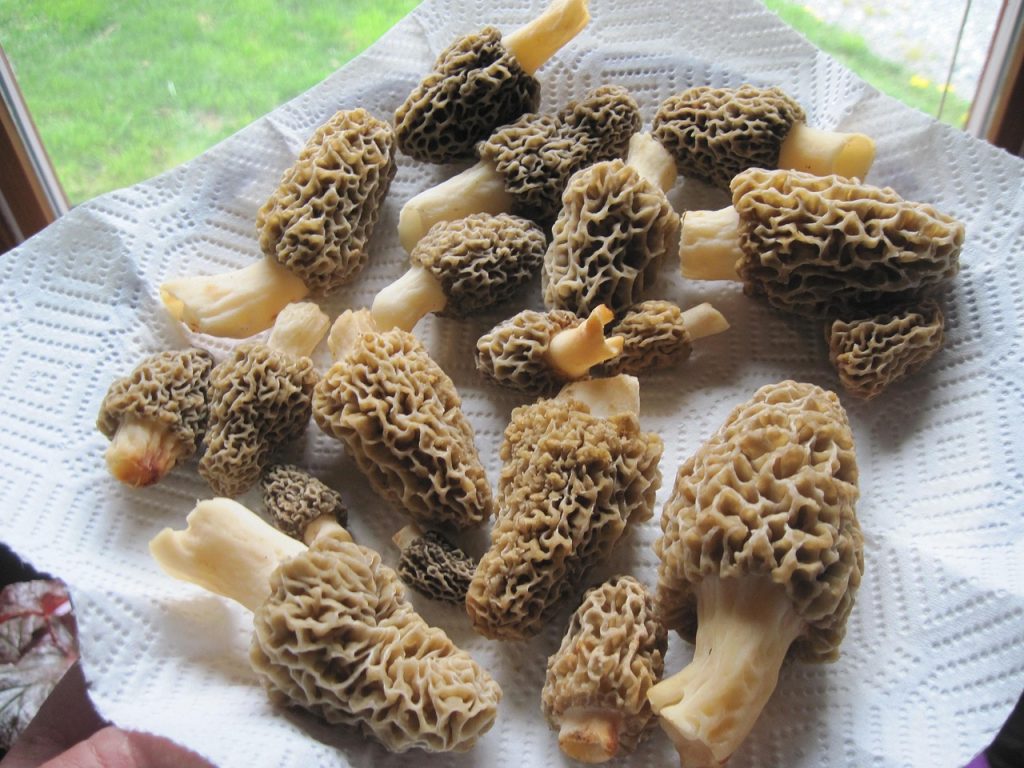
Every spring, across the temperate reaches of the Northern Hemisphere, a quiet madness descends. The initiated call this “Morel Fever.” This obsession drives otherwise sensible people into the darkest, muddiest corners of the wilderness – all in the name of morel mushroom foraging. They trek through thorny thickets. They scramble down limestone ravines. They navigate river bottoms, eyes fixed to the ground. They are searching for the True Morel (Genus Morchella), a fungus that has attained legendary status among foragers, chefs, and scientists. Successful morel mushroom foraging begins with understanding this obsession.
But what exactly is a morel? To the casual observer, it is a “choice edible.” To the mycologist, it is a biological enigma. We are living through a profound scientific re‑evaluation of Morchella. For over a century, we assumed a handful of species populated the globe. DNA sequencing shattered that illusion. Whether you are a beginner or a seasoned hunter, morel mushroom foraging requires unlearning old myths. The secrets you’ll discover here will transform your morel mushroom foraging from guesswork to science.
In the following pages, we explore counter‑intuitive morel mushroom foraging secrets: the DNA identity crisis, urban invaders that love woodchips, half‑free anomalies, hidden chemistry, ancient origins, ecological modeling, fire‑loving phoenixes, and the scent of the woods. This investigative journey reveals an organism far more complex and mysterious than a simple dinner. Ready to level up your morel mushroom foraging? Let’s dive in.
TAKEAWAY 1: THE GREAT DNA IDENTITY CRISIS (WE’VE BEEN CALLING THEM THE WRONG NAMES)
Before diving into morel mushroom foraging, know this: you have probably been calling them by the wrong names. The story of modern morel mushroom foraging begins with a detective story. For decades, North American mycologists assumed morels in our woods were identical to those in Europe. We used European names – Morchella esculenta for yellows, Morchella elata for blacks, Morchella semilibera for half‑frees. This was taxonomic “lumping,” where visually similar specimens were assumed the same species regardless of origin. Accurate morel mushroom foraging depends on knowing who you’re really picking.
The 2011 Taxonomic Revolution
The turning point arrived in 2011‑2012, when Kuo, O’Donnell, and Volk published landmark papers in Mycologia. Using multilocus DNA testing, they proved that North American morels are largely indigenous and distinct from European counterparts. The shockwaves rippled through the morel mushroom foraging community. (For a broader overview, see the USDA Forest Service morel report.)
Nowhere was this more apparent than with the Half‑Free Morel. As noted: “In 2011, Michael Kuo… validated that Morchella semilibera is an indigenous European species.” The “half‑free” morels in North America are actually two separate, visually indistinguishable species: Morchella punctipes (east of Rockies) and Morchella populiphila (Northwest). For serious morel mushroom foraging, this distinction matters – they have different habitats and seasons.
The Cold Case of Charles Horton Peck
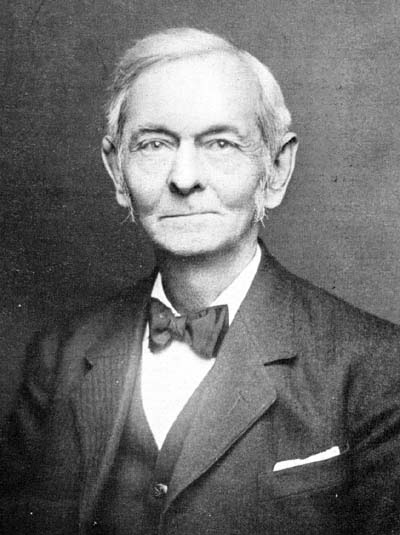
This genetic validation was a posthumous victory for Charles Horton Peck, the legendary New York State Botanist. In 1903, Peck noticed that Half‑Free Morels he found possessed “tiny spikes” on their stems – a feature not documented in European descriptions. He proposed the name Morchella punctipes (spotted‑stem). For 108 years, Peck’s name sat in the shadows. The 2011 DNA results solved a cold case. This history underscores a fundamental maxim for morel mushroom foraging: Education is King. Knowing the scientific name – the “spikes” that define a species – makes your morel mushroom foraging safer and more rewarding.
TAKEAWAY 2: THE URBAN INVADERS (WHY MORELS LOVE YOUR LANDSCAPING)
The traditional image of morel mushroom foraging involves trekking deep into ancient, undisturbed forests. While many species prefer pristine niches, one of the most successful members of the genus has a different strategy. Morchella importuna is the ultimate urban opportunist. If you want to practice morel mushroom foraging without leaving your neighborhood, this is your species.
The “Inconsiderate” Morel
The epithet importuna means “assertive,” “unseasonable,” or “inconsiderate.” It describes the mushroom’s habit of appearing suddenly and in massive numbers where it was not invited. For urban morel mushroom foraging, skip the deep woods and check your woodchip beds.
Unlike reclusive forest morels, M. importuna thrives in human‑disturbed environments:
- Landscaped urban gardens and planters.
- Woodchip beds and piles of wood mulch.
- Disturbed ground near construction sites.
- Fire pits and dirt basements.
Identifying the Urban Invader
Visually, M. importuna is a masterpiece of geometry: a “ladder‑like” pattern of pits and ridges. While other morels have chaotic honeycombed caps, M. importuna features 12–20 primary vertical ridges crossed by horizontal ridges, creating rectangular pits. This species is a saprobe, decomposing organic matter like woodchips. That lifestyle makes it a strong candidate for cultivation. For morel mushroom foraging in cities, M. importuna is your most reliable target.
TAKEAWAY 3: THE HALF‑FREE ANOMALY (THE MUSHROOM THAT WEARS A SKIRT)
Among true morels, the Half‑Free Morel (M. punctipes and M. populiphila) is a morphological outlier that confuses novice foragers. Colloquially known as the “Peckerhead Morel,” its proportions are radically different. Proper morel mushroom foraging requires you to recognize this anomaly.
Morphology of the “Skirt”
Most morels have a cap fused entirely to the stipe. In the Half‑Free variety, the cap attaches only halfway down. The bottom half hangs free in a “skirt‑like fashion.” Mature specimens stand 1.5–15 cm tall, cap only 2–5 cm. As they mature, the stipe “stretches,” lifting the cap like a miniature street lamp. For morel mushroom foraging, this skirt is a key identifier.
The Survival Risk: Dangerous Lookalikes
The skirted cap resembles several poisonous lookalikes:
- Verpas (Verpa bohemica): cap attached only at the tip.
- False Morels (Gyromitra): brain‑like texture, multiple attachment points.
The definitive field test for morel mushroom foraging safety: a vertical cross‑section. A true Half‑Free Morel has a single, large, hollow chamber from top to bottom. Verpas have cottony stipes. False Morels (Gyromitra) have solid or chambered stipes and contain gyromitrin, a toxin that metabolizes into rocket‑fuel compound MMH. Never confuse them. For a deeper dive on lookalikes, check our Beginner’s Mushroom Safety Checklist (replace with your actual internal link).
TAKEAWAY 4: THE HIDDEN CHEMISTRY OF THE “CHOICE EDIBLE”
The culinary reputation of the morel is well‑deserved, but its chemical profile contains a hidden warning. A critical rule of morel mushroom foraging: never eat them raw. Always cook thoroughly.
The Raw Reality: Hydrazine and Amino Acids
Raw morels contain hydrazine, a gastrointestinal irritant. Morchella esculenta also contains cis‑3‑amino‑L‑proline, an uncommon amino acid. These compounds require thorough cooking – blanched, seared, or parboiled – to neutralize. Consumption of raw morels leads to severe GI distress and, in some cases, neurological symptoms. (See the CDC information on hydrazine exposure.) So a key step in morel mushroom foraging is cooking what you bring home.
A Nutritional Powerhouse
Once heat neutralizes the toxins, the morel becomes one of the most nutrient‑dense foods in nature. Morels are a significant source of protein, minerals, and vitamins.
Nutritional Breakdown (Dry Weight Basis):
- Protein: Up to 32.7%
- Carbohydrates: 38–38.1%
- Crude Fat: 2–26%
- Fiber: 17.6%
Morels contain 18 of 20 essential amino acids: isoleucine, leucine, lysine, methionine, phenylalanine, threonine, valine. They are also concentrated in B‑vitamins: B1, B2, B12, niacin, B5, folic acid, biotin. Research into morel polysaccharides shows anti‑bacterial, anti‑viral, and tumor‑suppression potential. So morel mushroom foraging yields not just a meal but a functional food.
TAKEAWAY 5: MORELS ARE ANCIENT “LAURASIAN” SURVIVORS
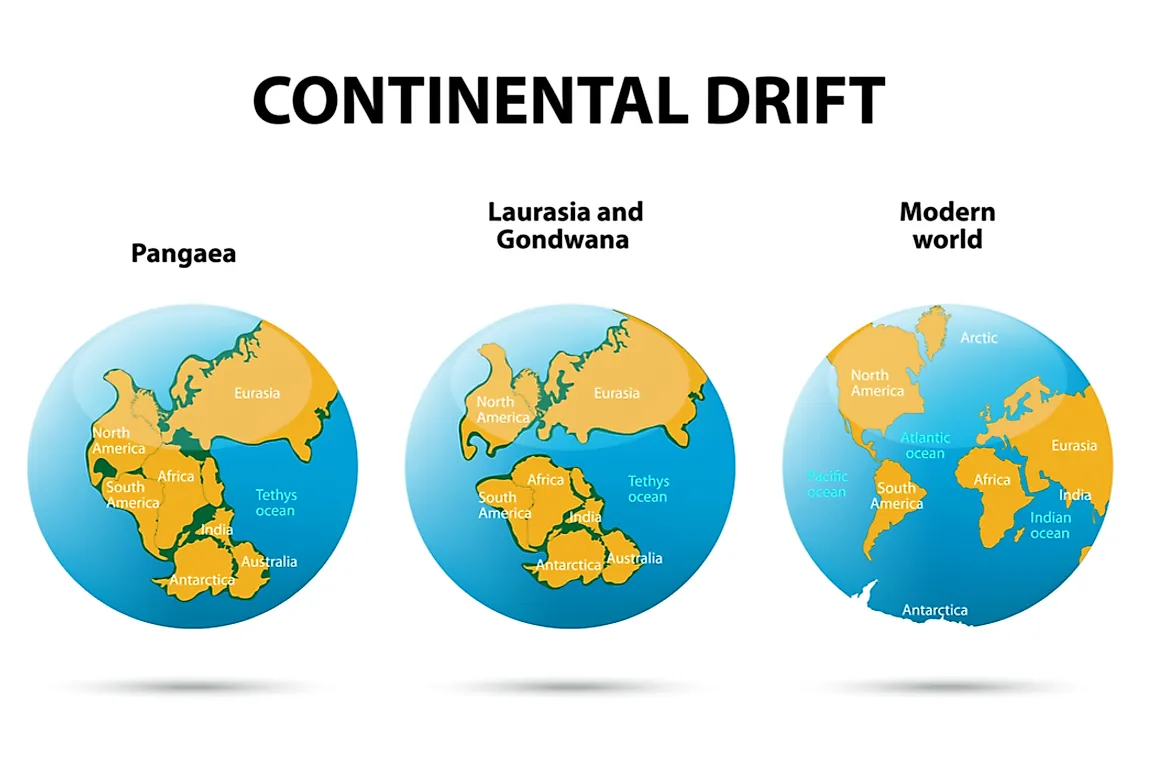
To look at a morel is to view a biological design that has remained virtually static for over 100 million years. Understanding this deep history makes morel mushroom foraging feel like walking through a living fossil bed.
Evolution and Diversification
Molecular dating suggests the family Morchellaceae originated in the middle Triassic (~243 million years ago). The genus Morchella diverged from its closest relatives roughly 129.6 million years ago in western North America. Morels have a “Laurasian distribution” – they evolved on the ancient northern supercontinent of Laurasia. Despite discharging millions of spores, morels exhibit high “continental endemism.” They remain on their continents, evolving into unique “phylospecies.” For morel mushroom foraging, this means your local morels are truly local – genetically distinct from those in Europe or Asia.
The Three Great Clades
Taxonomists divide the genus into three primary lineages:
- Section Rufobrunnea: the oldest branch, containing the “blushing morel” (M. rufobrunnea).
- Section Morchella (Yellow Clade): includes classic “Yellow” morels.
- Section Distantes (Black Clade): includes “Black Morels” and most fire‑associated species.
The fruit body plan has remained “remarkably static” since the Cretaceous. That stability rewards patient morel mushroom foraging – the same visual cues have worked for millions of years.
TAKEAWAY 6: ECOLOGICAL NICHE MODELING (THE SCIENCE OF WHERE THEY GROW)
Understanding where morels grow has moved from “hunter’s intuition” to high‑resolution computer modeling. Modern morel mushroom foraging uses ecological niche modeling to predict where they’ll fruit. Data‑driven morel mushroom foraging replaces guesswork with isothermality and slope aspect. (For additional datasets, visit the North American Mycological Association.)
Climatic and Environmental Variables
Morels are sensitive to a complex array of factors:
- Isothermality (Bio3): daily temperature fluctuation relative to annual range.
- Temperature Seasonality (Bio4): variation throughout the year.
- Precipitation of the Wettest Month (Bio13).
- Slope and Aspect: N to NW slopes retain moisture.
PCA‑env analysis shows the first two axes account for 69.55% of climatic variation across morel ranges. PC1 (41.36%) and PC2 (28.19%) represent the delicate balance of temperature and precipitation required for fruiting. For serious morel mushroom foraging, study your local isothermality maps.
The “Saprobic‑to‑Symbiotic” Continuum
Are morels saprobes (decomposers) or mycorrhizal (mutualistic with trees)? The answer: it depends. Morels exist on a continuum. They may live as saprobes, breaking down leaf litter, then switch to a mycorrhizal state to gain energy for fruiting. Recent research identifies specific associations:
- Morchella populiphila strictly with black cottonwoods.
- Morchella esculenta near dying elms, ash, hickory, old apple orchards.
- Morchella prava in sandy soil near rivers/lakes under oaks and pines.
These associations are gold for morel mushroom foraging – target the right trees, find the morels.
TAKEAWAY 7: THE PHOENIX OF THE FOREST (FIRE‑ASSOCIATED MORELS)
In the western mountains of North America, a specific group of morels has evolved to be “pyrophilous” – fire‑loving. These are the phoenixes of the forest, appearing in staggering numbers only in the year following a wildfire. Post‑fire morel mushroom foraging is a specialized skill – look for the “gray morel.” Even if you never visit a burn site, knowing about fire morels enriches your morel mushroom foraging knowledge.
The Gray Morel (Morchella tomentosa)
Morchella tomentosa (fuzzy‑foot or black‑foot morel) is a specialist of burned conifer forests. It has fine hairs (tomentum) on young fruit bodies and a thick, double‑walled stem. It possesses “sclerotia‑like underground parts” – dense mycelial masses that survive fire and wait for spring rains. For morel mushroom foraging after a wildfire, target high‑elevation burns (1000m+).
The Grass Symbiont (Morchella sextelata)
Morchella sextelata (phylospecies “Mel‑6”) colonizes “cheatgrass” (Bromus tectorum), a highly invasive species in the American West. The morel acts as an endophyte, helping the grass survive soil temperatures up to 149°F (65°C) and increasing its seed production. By helping an invasive grass dominate after a fire, the morel unintentionally reshapes the ecosystem. This bizarre relationship is one of the most surprising morel mushroom foraging facts – the mushroom is a hidden player in wildfire ecology.
TAKEAWAY 8: THE SCENT OF THE WOODS (A FORAGER’S INTUITION)
While science provides the framework, the act of finding morels remains a sensory and narrative experience. The best morel mushroom foraging advice? Trust your nose and the smell of wet soil.
Beyond the Calendar
Foraging legend says the arrival of the Half‑Free Morel (the “Peckerhead”) announces the true morel season. But relying on a specific date is futile due to erratic spring weather. Instead, look for “signs of the woods.” As the source context suggests: “A date will not give you the same results as reading how you described the smell of the woods… write a story about finding your mushroom to grow your understanding.”
When searching for Half‑Free Morels, look for “street lamps in a park” – they line muddy puddles or wet clearings in patches of birch, beech, and oak. Focus on the smell of transitioning soil and the “squish” under your boots. Intuition honed by experience is an underrated tool in morel mushroom foraging.
High‑Resolution Species Catalog
To truly understand the Morchella genus, study individual “phylospecies” through a high‑resolution lens. Each has unique traits useful for morel mushroom foraging:
- Morchella importuna (Landscape Morel): cap 3–15 cm, ladder‑like ridges. Habitat: urban woodchip beds, gardens.
- Morchella punctipes (Eastern Half‑Free): cap 2–5 cm, stipe with tiny points. Habitat: hardwood forests east of Rockies.
- Morchella rufobrunnea (Blushing Morel): bruises salmon/orange when touched. Habitat: disturbed soil, woodchips; fruits Nov–May in Mediterranean climates.
- Morchella prava (American Beach Morel): cap 3–6 cm, gnarled, irregular pits. Habitat: sandy soil near rivers/lakes under oaks/pines. Range: Montana to Ontario.
- Morchella tomentosa (Gray Morel): conical to egg‑shaped cap, fine hairs, double‑walled stem. Habitat: burned conifer forests, high elevation.
- Morchella dunensis (Dune Morel): originally described as form of M. esculenta, now distinct. Habitat: coastal dunes, Mediterranean basin.
Memorizing these species profiles will elevate your morel mushroom foraging from amateur to expert.
CONCLUSION: THE QUESTION LEFT IN THE SOIL
Our understanding of the morel has shifted from a few cosmopolitan species to over 80 unique, localized “phylospecies.” We have learned that morels in gardens are assertive urban specialists, and those in mountains are ancient survivors that have perfected their form over 130 million years. Morel mushroom foraging is no longer guesswork – it’s a science of phylogenetics, ecology, and sensory awareness. Whether you rely on DNA maps or the smell of wet soil, morel mushroom foraging rewards patience and curiosity.
As the source reminds us: “ancestral reconstructions should not be viewed as definitive… but as a work‑in‑progress toward a deeper understanding.” Mycology is a living science, and every spring provides new data.
Whether you forage in your garden or a burn scar, morel mushroom foraging connects you to an ancient survivor. The next time you spot a morel, will you see a simple dinner, or an ancient, assertive survivor that science is only just beginning to name? Get out there, practice safe morel mushroom foraging, and enjoy the hunt.
SELECTED BIBLIOGRAPHY
Akmal, M., et al. (2026). “Ecological Niche Overlap and Environmental Associations Among Species of the Morchella.” New Zealand Journal of Botany, 64(1).
Du, X.‑H., et al. (2012). “Multigene molecular phylogenetics reveals true morels (Morchella) are especially species‑rich in China.” Fungal Genetics and Biology, 49(6), 455‑469.
Kuo, M., et al. (2012). “Taxonomic revision of true morels (Morchella) in Canada and the United States.” Mycologia, 104(5), 1159‑1177.
Loizides, M., et al. (2016). “Extended phylogeography of the ancestral Morchella anatolica supports preglacial presence in Europe and Mediterranean origin of morels.” Mycologia.
O’Donnell, K., et al. (2011). “Phylogeny and historical biogeography of true morels (Morchella) reveals an early Cretaceous origin and high continental endemism.” Fungal Genetics and Biology, 48(3), 252‑265.
Richard, F., et al. (2015). “True morels of Europe and North America: evolutionary relationships inferred from multilocus data.” Mycologia, 107(2), 359‑382.
Roehl, T. (2018). “#211: Half‑Free Morels.” Fungus Fact Friday.
Here’s the focused version:
About the Author
Kody Higby is a mycologist, science communicator, and the creator of Lichen The Vibe — the world’s most comprehensive mycology podcast and fungal science compendium.
Kody has spent years deep in the weeds of the fungal kingdom, developing an encyclopedic knowledge of species identification, wild foraging, cultivation techniques, medicinal and psychedelic fungi, lichen biology, mycelium ecology, and fungal taxonomy. As host and producer of Lichen The Vibe under District Podcasts, he has built the largest mycology podcast library on earth — more than 300 episodes covering the full breadth of a kingdom that underpins almost every ecosystem on the planet yet remains almost entirely unknown to the people living inside those ecosystems.
Kody writes and produces in the tradition of science journalism that refuses to talk down to its readers. Every article on the Lichen The Vibe blog is built to serve two audiences simultaneously — the serious mycologist who knows their Amanita phalloides from their Amanita ocreata, and the curious newcomer who just found a strange mushroom in their backyard and needs to know if it will kill them. The compendium is an ongoing mission to make the entire world of fungi freely accessible, rigorously accurate, and impossible to put down.
When he’s not recording, writing, or identifying specimens, Kody is in the field — foraging, observing, and adding to a personal knowledge base that continues to grow with every season.